Size Matters: Exploring a Larger Republican Set
Over my years as a collector I have seen and handled hundreds of vintage sets, almost all of which were made in China and destined for the domestic market. Many are similar to each other but rarely identical, especially those made before the end of the Republican Period (1949). Yet it’s still possible for me to be surprised by a set. This week I revisited a shelf of sets I bought some time ago and was so pleased to see one in particular I thought I’d share.
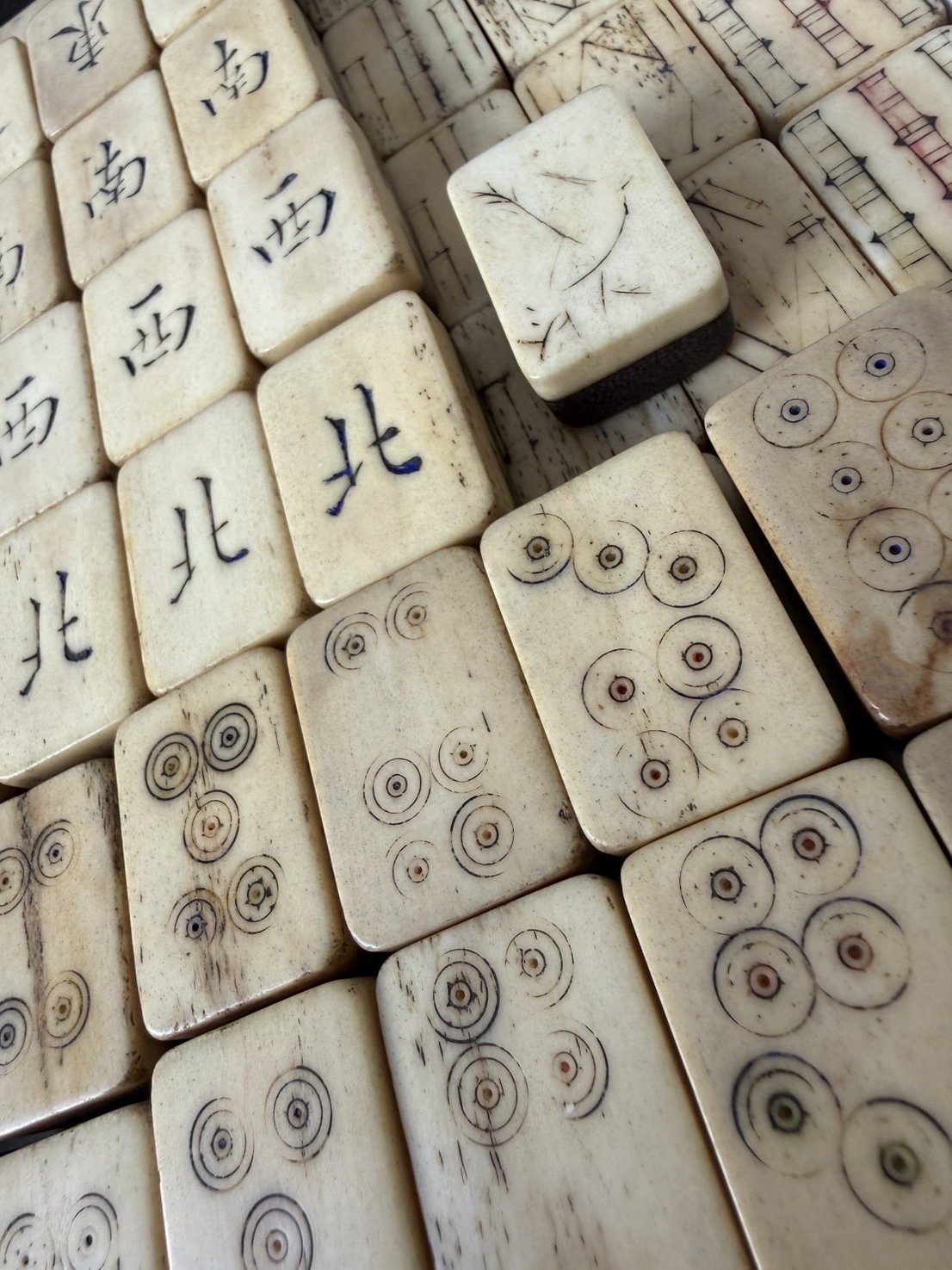
The first striking thing about this Republican 136 tile set is the size of the tiles. Not the usual diminutive scale at all, but something more akin to the 30mm tiles we see today. This is the only Republican set I have seen of this size, but the shaping of the bone, the curve of the bamboo and the perfection of the joints are all testament to the standard of workmanship of the period.
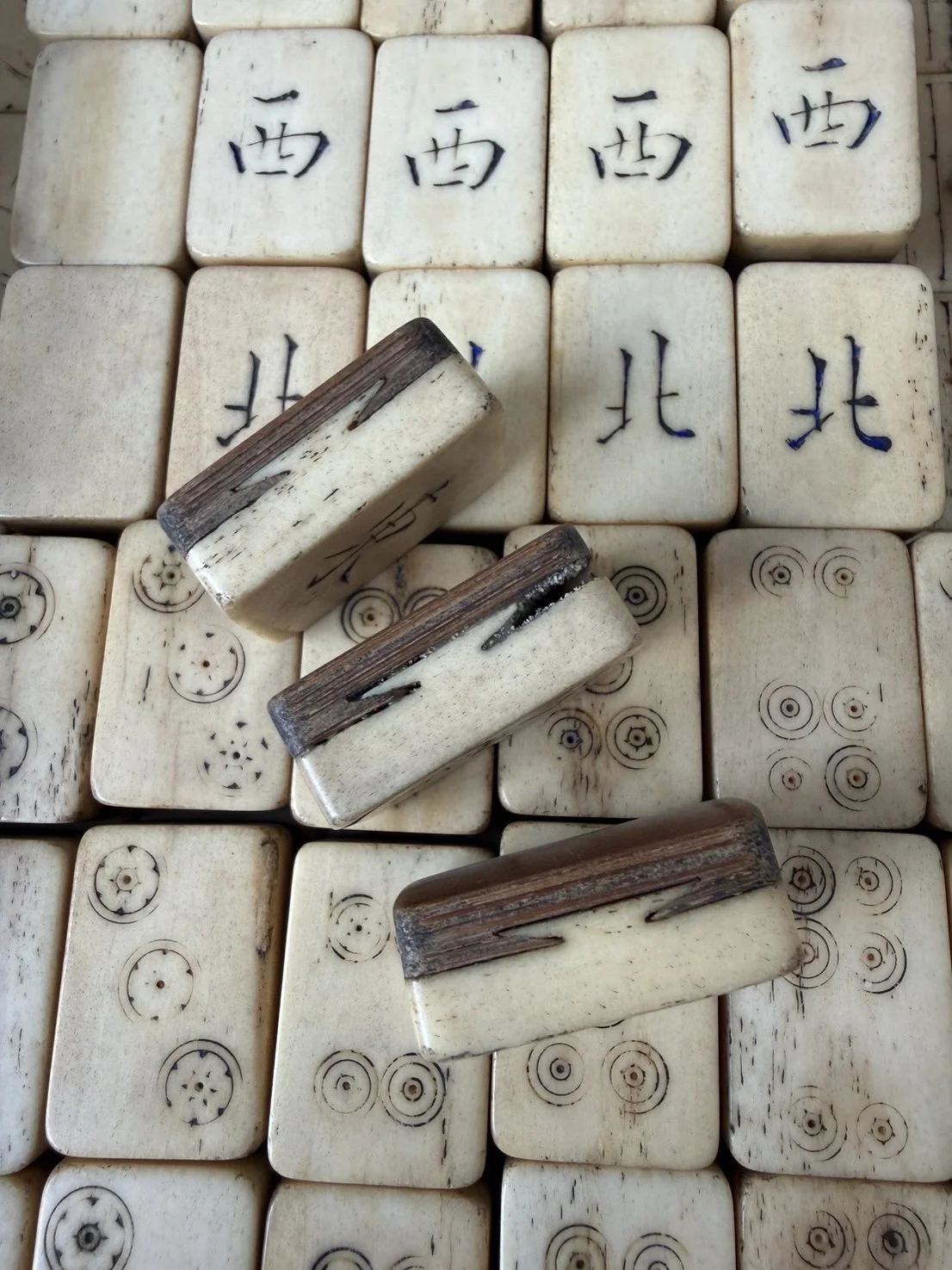
The bone itself is thick and lustrous, lending heft to each tile. The smoothness of each piece gives them a softness, almost a soapiness which comes with age. Those elongated joints add not only beauty and craftsmanship to the sides of the tiles, but keep them stable and durable. Every tile in the set is still firmly locked together and will stay that way.
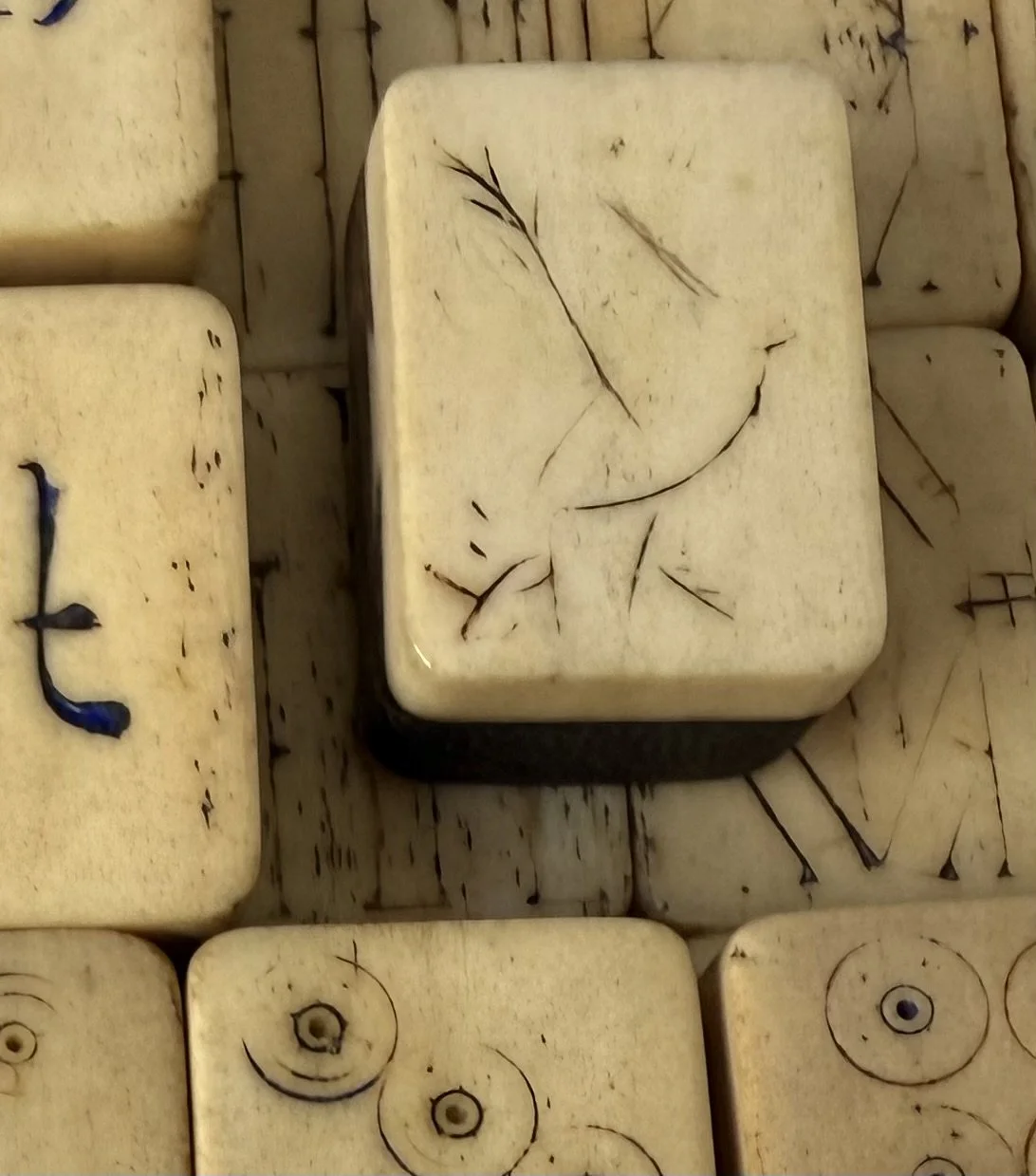
There is discolouration across the tiles, the bone yellowing as it ages. Tiles of this thickness can only be cut from the thickest areas of bone, so several leg bones are needed to make all 136 tiles. Each leg has its own genetic structure and ages differently. Each area has different amounts and depths of blood vessels, so shows varying traces of Haversian lines. The carving itself, like with many Republican sets, is relatively shallow. The colours applied to the carvings do not go very deep so they fade and, with regular handling the carving itself gets erased. This can be seen very clearly with the one tiao or bird tiles in this set.
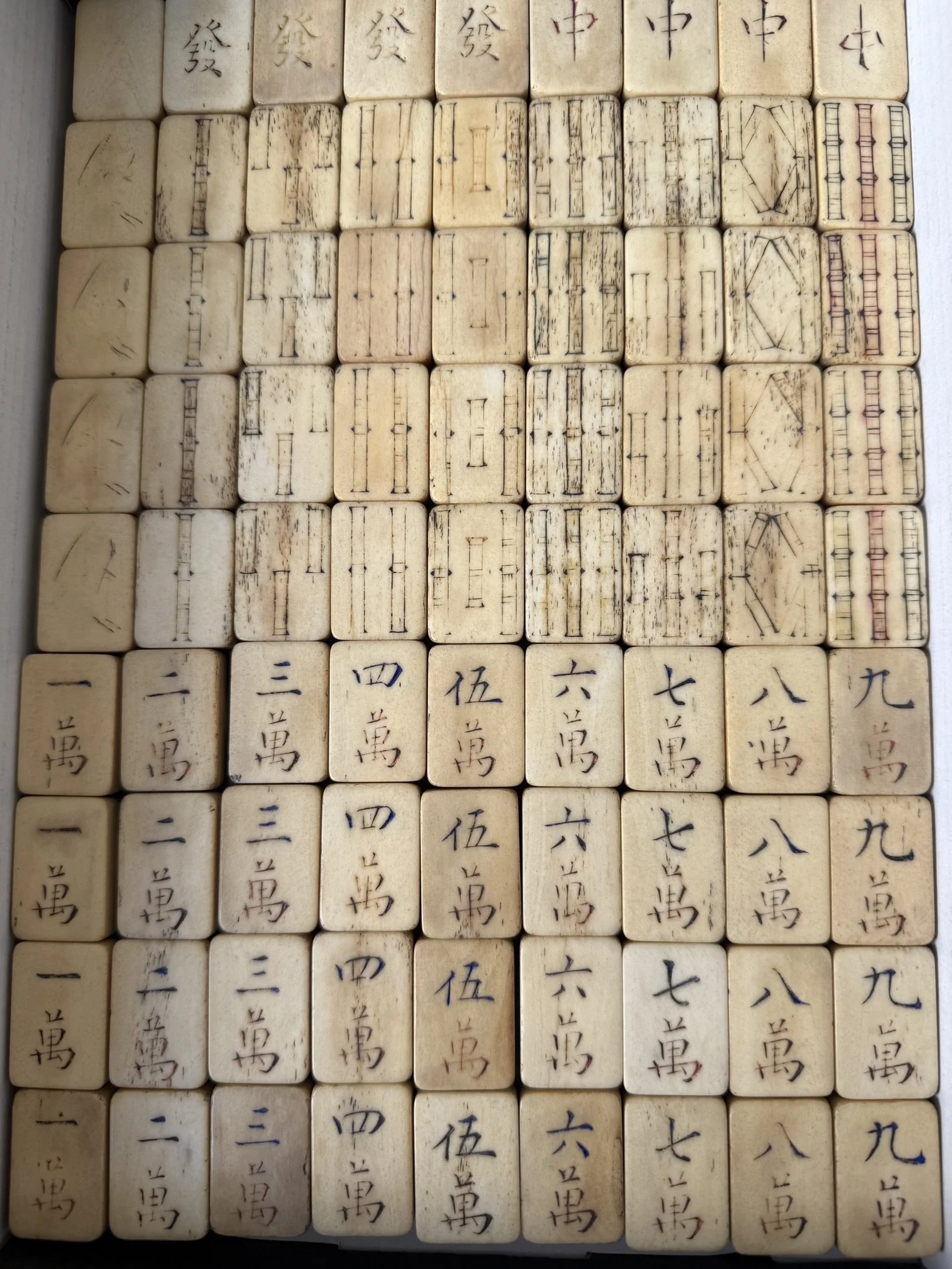
Perhaps the most stunning aspect of all is the carving of those tiao or bamboo tiles. The nine tiao tiles have remained especially vibrant, showing both the fineness of their design and giving us a hint of the colourfulness of their original form. Their design is unusual with its strongly linear form and almost 3D joints in the bamboo.
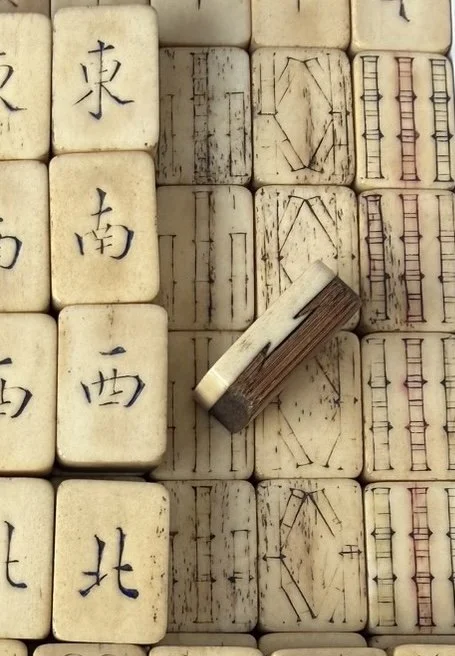
The eight tiao tiles are also distinctive in their arrangement of the bamboo. Grouped as if they are in bunches secured with a string, they nevertheless remain linear and structured. The creativity in this design becomes clear if you compare it with the more usual formations shown below. There are clear similarities with the first (Wilkinson Laufer) example below but the proportions and rhythm are quite different, preserving linearity and the influence of art deco.
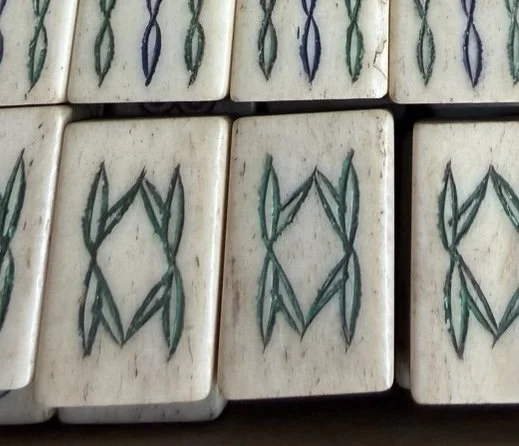
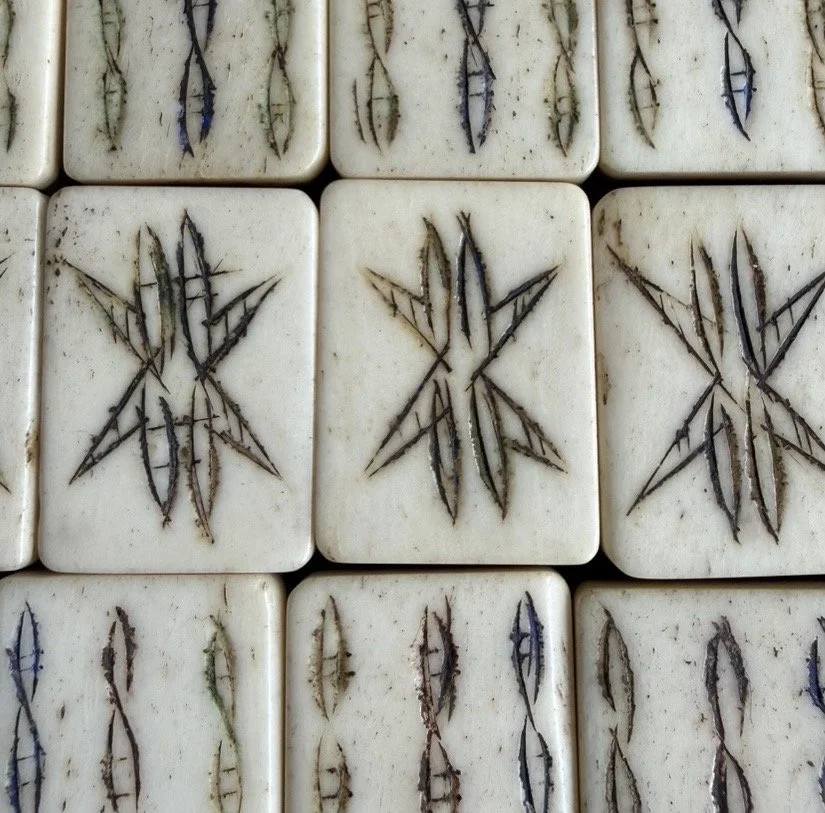
One of the strongest lessons I have learnt is that the Republican Period sets we can find today are rarely the same. The size of the tile, the shape of the corners, the thickness of the bone, the shape of the joints, the colour of the bone, the colour of the bamboo, the thickness of the bamboo, the carving itself, the colour pigments used, the number of tiles, all vary making each set distinctive. The collecting opportunities are endless!