Is it Us vs Them: Give a Thought to Sichuan Mahjong
I don’t remember much of the vast array of reading I did as a student, but one thing that has stayed with me is Francis Olsen’s seminal work on revealing how binary dualisms appear objective but produce a self-serving way of seeing. Olsen’s concern was how opposing categories like public/private, rational/irrational, culture/nature were used in law. In mahjong right now we see the classic binary of Asian/Western being used as a way of measuring authenticity in the game, but is that just a way of making a complex story seem knowable and politicised?
I have written about the spread of mahjong before, but here I want to look at the difficulty of thinking about mahjong as a single game on any Continent. In China the government orchestrated the production of a single set of rules for use in competitions, and a fine set of rules they are. These are the rules I play most of the time. But that does not mean that these rules are played all over China. Each Province, each City, each neighbourhood may have their own version of play that resonates with these Competition Rules, but remains distinct.
A case in point is ‘Sichuan Mahjong.’ That’s the generic name given to a game that uses only 108 tiles; the three suits without dragons, winds or flowers. The object of the game is familiar: a winning hand is 4 sets of 3 tiles and a pair. The set up is similarly familiar: 4 players build a wall and take 13 tiles each, 14 for the dealer. The wall is stacked but each side has less tiles, usually 28 on the East and West sides, 26 on the North and South. The symmetry one anticipates has already gone before the game starts.
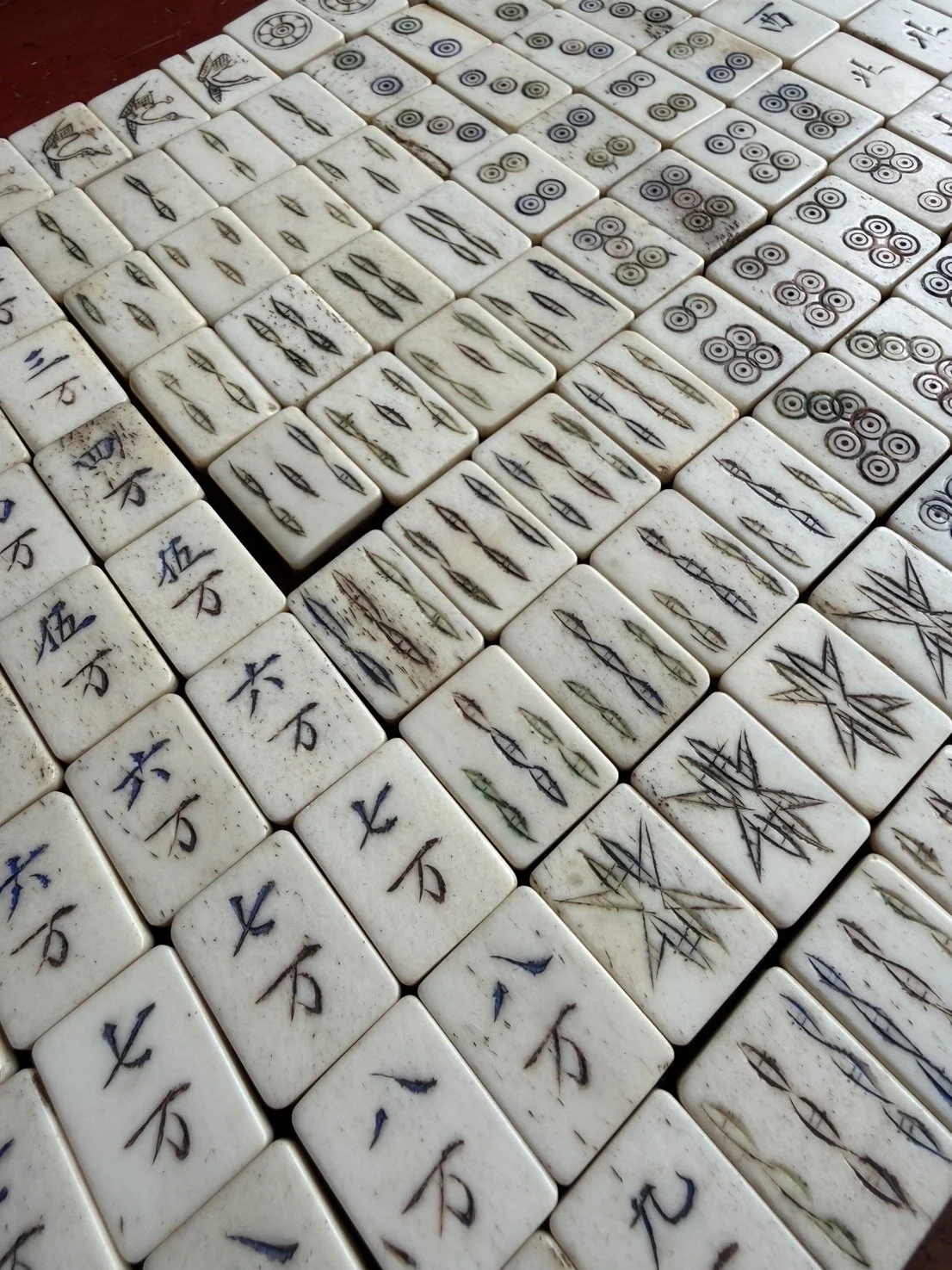
The game doesn’t start immediately after the deal, but instead each player swaps 3 tiles with another player. The direction of this swap changes, sometimes across the table, sometimes to the left, sometimes to the right. It is usually done, but not always. Is this the foundation of the Charleston that is found in American mahjong?
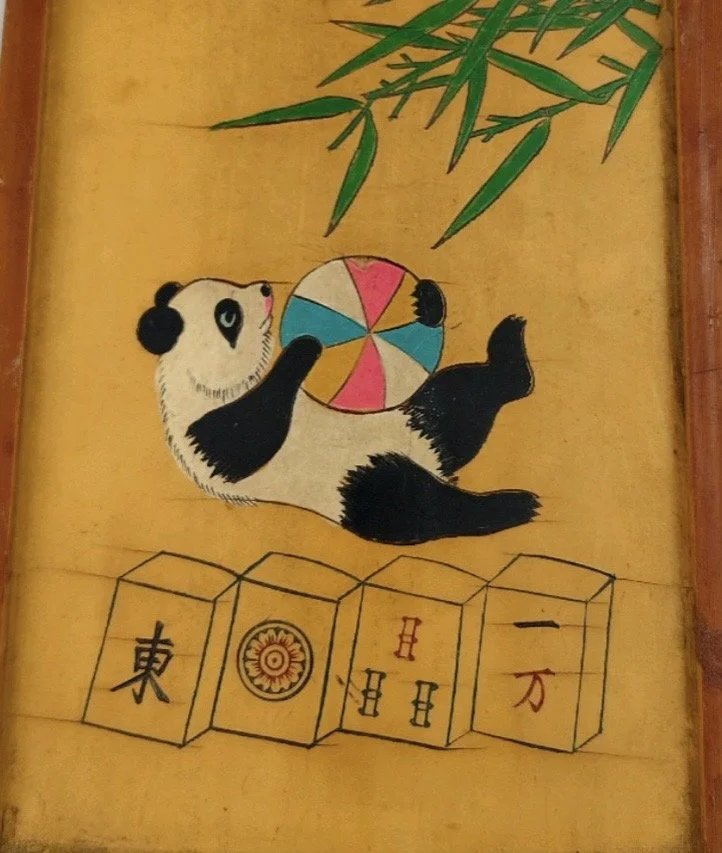
Once this is done, usually but not always, players declare a Missing Suit. This is a suit nominated not to appear in their winning hand, so a player cannot win with any tiles from that suit in their hand. The strategic options for the game have been radically changed, before any tile is cast.
Once the game is underway further differences appear. Usually, but not always, players cannot make a chow from a discarded tile. They can make a Pung but Chows can only be made from tiles drawn from the wall. This means that the game has more Pungs and Kongs as well as a more restricted bank of tiles each player can win from. This is a fast game, less interrupted by claims of discards, and a strong interplay between what you know other players don’t want and the luck of the draw.
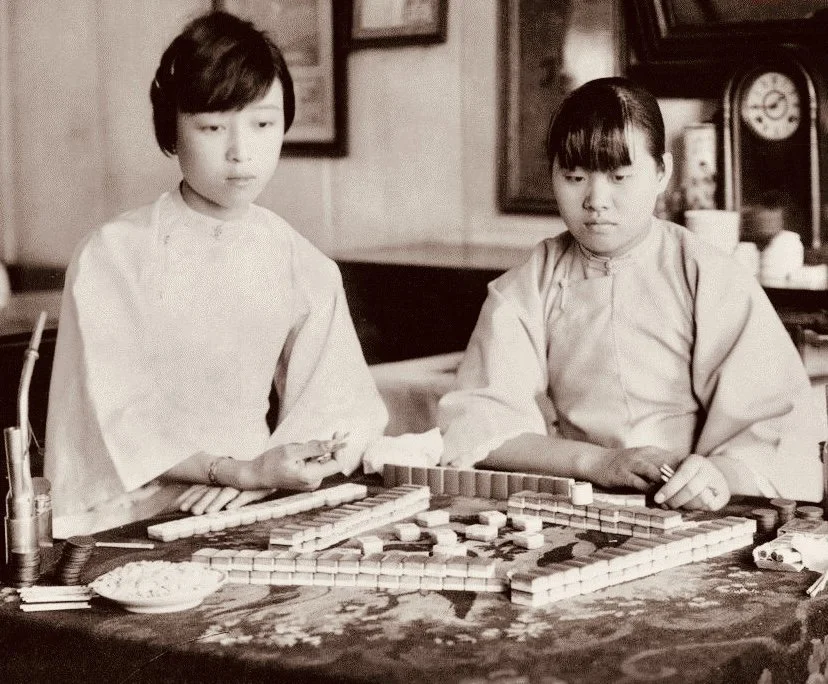
When it comes to scoring, the Sichuan system is almost always based on doubling according to fan value of a restricted number of hand options. The usual suspects are All Pungs (1 fan), a Kong (1 fan), One Pure Suit (2 fans), Seven Pairs (2 fan), Seven Dragon Pairs (with two identical pairs) (3 fan), Self-drawn Win (1 fan). Each fan means you double the basic score once, so a One Pure Suit hand that includes a Kong means that you multiply the basic score for a winning hand by 8. And that’s not all, in Sichuan mahjong it’s usual to play on after the first win is declared until all the wall is gone, allowing other players the chance to win too. Usually only the 3 remaining players continue (Blood Battle to the End 血战到底 ) but in some variants even the winner can continue to play (Blood Flowing River 血流成河).
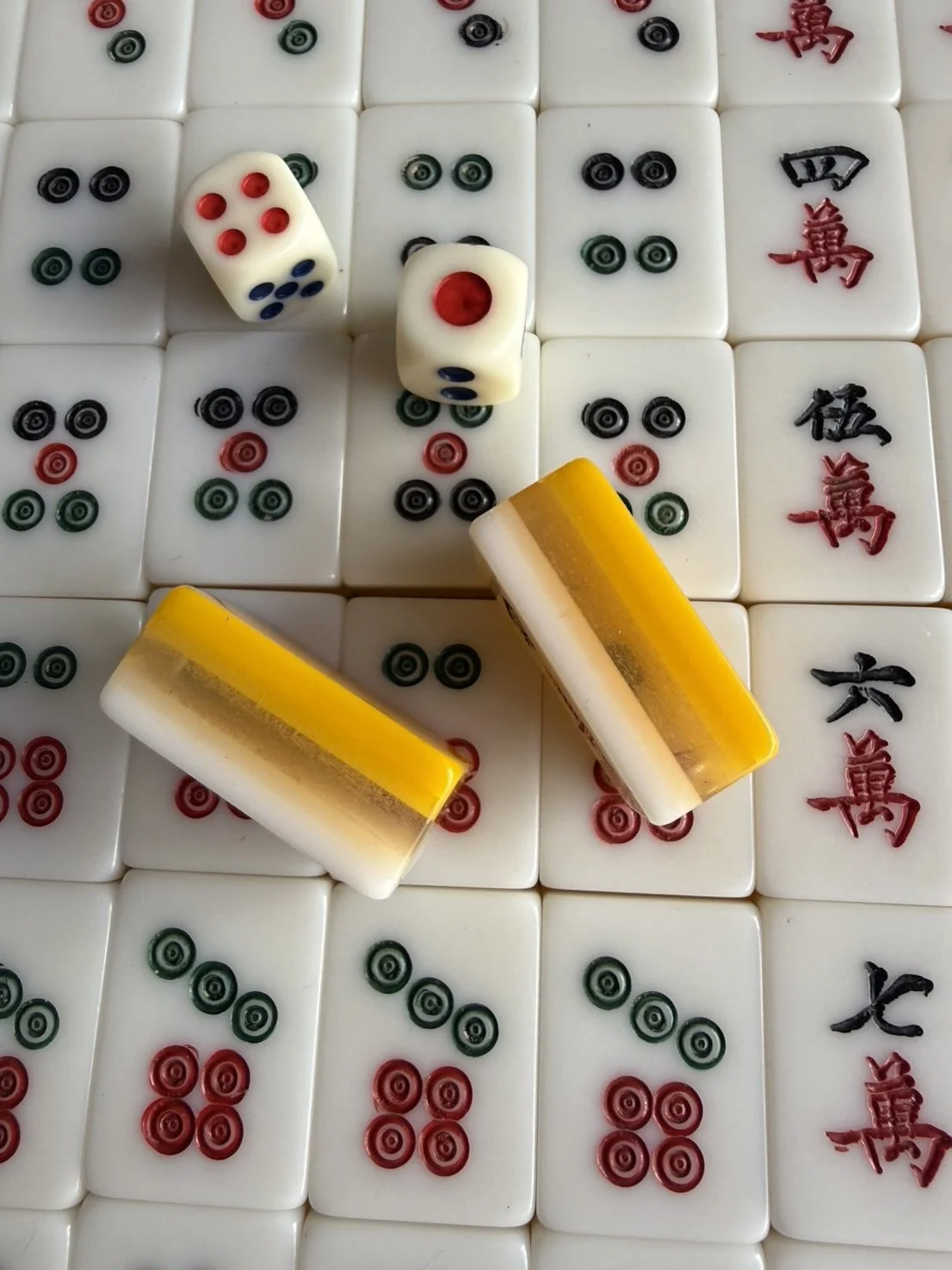
As I said, this is merely an outline of the most commonly found way of playing with 108 tiles. Certainly in the rules known as Chengdu Rules players cannot Chow from a discard, but elsewhere this is not necessarily the case. Declaring a Missing Hand is widespread, but not ubiquitous and Kongs often attract an on the spot bonus, rather than forming part of the final score. When people say Sichuan Rules it carries a meaning, but it doesn’t imply that everyone playing Sichuan Rules is following the exact same song sheet.
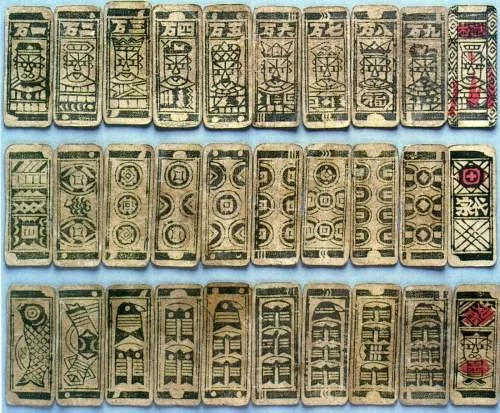
It’s most likely that Sichuan Rules evolved from the 136 tile set as a regional variation that responded to a desire for a faster, more suit-focused game. It is true that the suits in mahjong were in existence in trick-taking card games before dragons and winds were added to make mahjong in the South East of China, but there is scant evidence to suggest that Sichuan Rules evolved directly from these earlier games. As a variant within China, then, is it really more authentic than variations that developed in other provinces or in other countries? Or are all the myriad variations across the world part of the same family tree, each adapting to the demands of differing environments?
If you have a view please email me!