American Mahjong comes to China
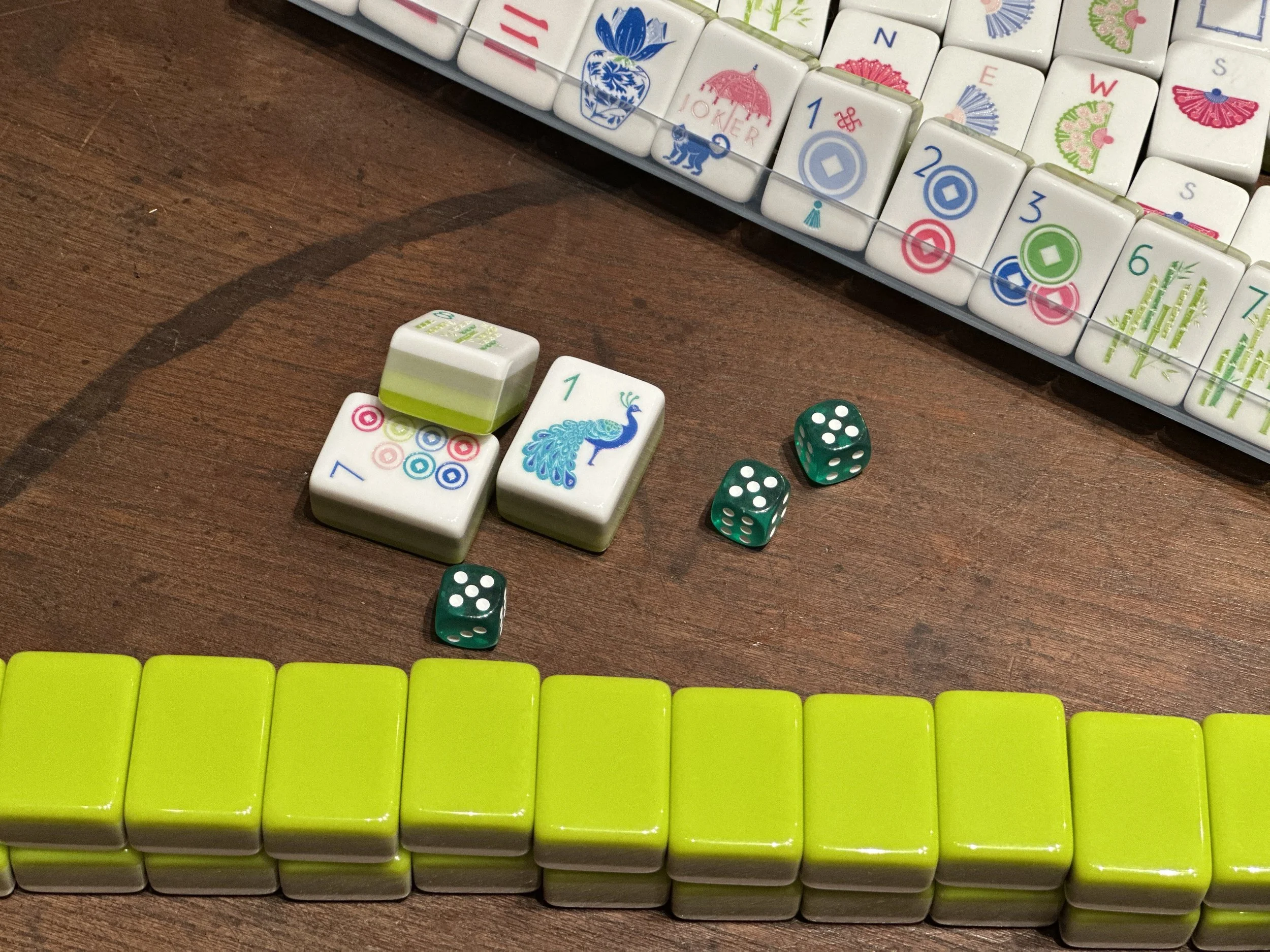
I was out at dinner last night with a large group of friends, mostly Shanghainese, when conversation turned to mahjong. First comments were about the constant simplification of the rules by players in Shanghai (‘what’s the point? It’s like playing snap!’) and then ‘And now there’s even New York mahjong!’
Mahjong has always been played by rules that are regional, in some cases by city area alone. Shanghai Rules differ from Ningbo Rules, Sichuan Rules and Hangzhou Rules. So it’s not surprising that Hong Kong Rules, Taiwan Rules, Japan Rules, British Rules all have their own characteristics. Perhaps what is more surprising is that all of these rules share some basic principles. There are three suits, usually plus winds and dragons, often with flowers and seasons too. Players are generally tasked to make 4 sets of 3 (sometimes 4) tiles and a pair to win. The biggest variations are in the scoring system and the role of the flower and season tiles. Yet with the American Rules much of this is turned on its head.
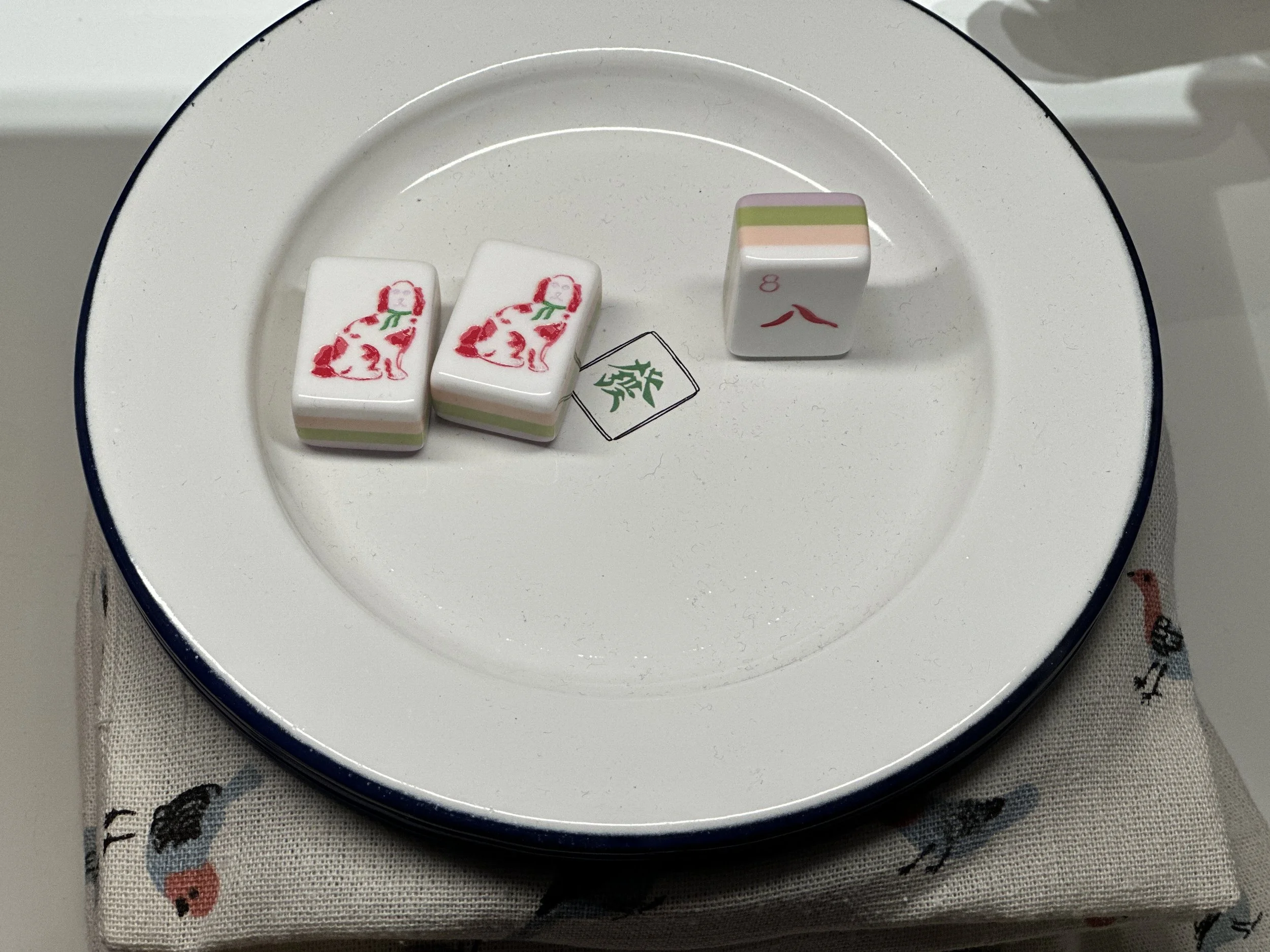
To begin with an American mahjong set has 160 tiles. In China early sets were 136 tiles, expanded to 144 tiles by the addition of 8 flower and season tiles. In some rules only 108 tiles (the 3 suits) are used. When export of the game began sets with 152 tiles appeared. The additional 8 tiles were not used in play. They were 4 blanks to act as replacement tiles when any were lost or damaged, and 4 Ting Pai tiles to be placed as a marker when players needed only one tile to win. In some sets instead of the 4 Ting Pai tiles (which bore these 2 characters) there were 4 Joker tiles, probably as the result of the early sets made for the American market and these were used in play. The current American 160 tiles has the standard 144 tiles plus 8 Jokers and 8 Blanks, all of which can be used in play.

The rules created by China for International competitions, a composite of all the various regional rules in China, use the standard 144 tiles and specify 88 scoring hands, none of which use jokers. I just obtained (from the Chinese internet shopping giant Taobao) a copy of the 2026 American Mahjongg League card, a rule card published every year showing the recognised winning hands for the coming year. As an American Rules newbie I was quite confused by it but sets could be 3, 4 or 5 tiles, Jokers could be used anywhere to represent any tile, and spelling out 2026 (using the bai ban or white dragon to represent the 0) was a component of several winning hands. Whilst Pungs and Chows were still the formations used, flowers and seasons were part of hands and the terminology used is distinct. Wan or Characters for example are known as ‘Cracks’, Tiao or Bamboos ‘Bams’, and Mahjong itself ‘Marge’. The game also begins with a process called a Charleston, when players swap tiles they don’t want with other players in a dance around the table.
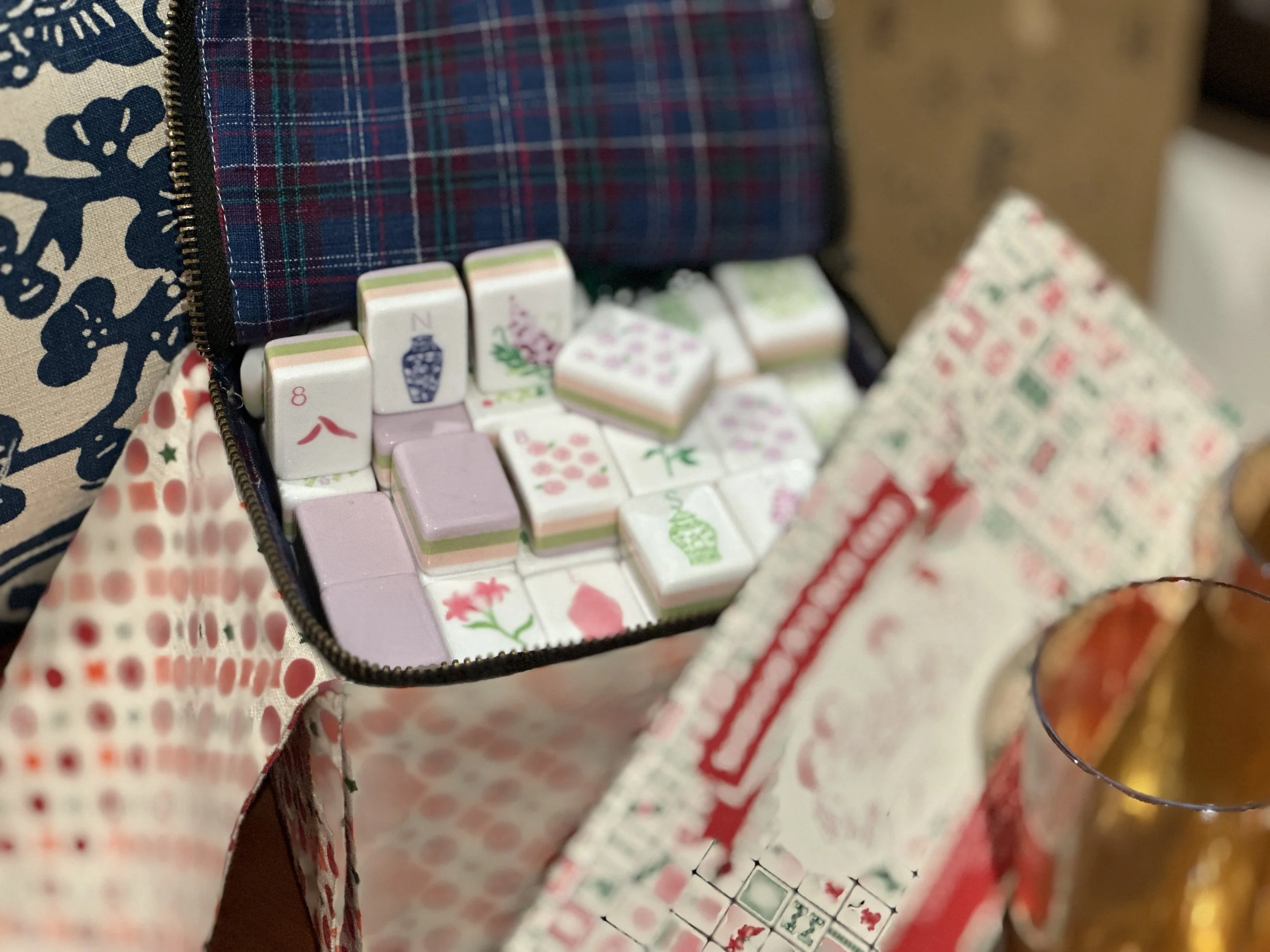
It was beginning to look and feel like a very different game from the one I know. Exploring Taobao further I found American mahjong sets that looked very different too. Unlike Chinese sets which are following a bigger is better trend (most are between 42 and 50mm tall) the available American sets are all 30mm and are commonly used with plastic or wood stands. This style echoes early exported bone and bamboo sets sent to the US. Designs on them have romanized numbers and some have red and green spaniels instead of Hong Zhong and Fa, Chinoiserie vases instead of flowers, fans for winds and monkeys as jokers. They come in pastel colours and are very pretty and light; quieter to wash than the 44mm heavy tiles commonly seen in Shanghai.
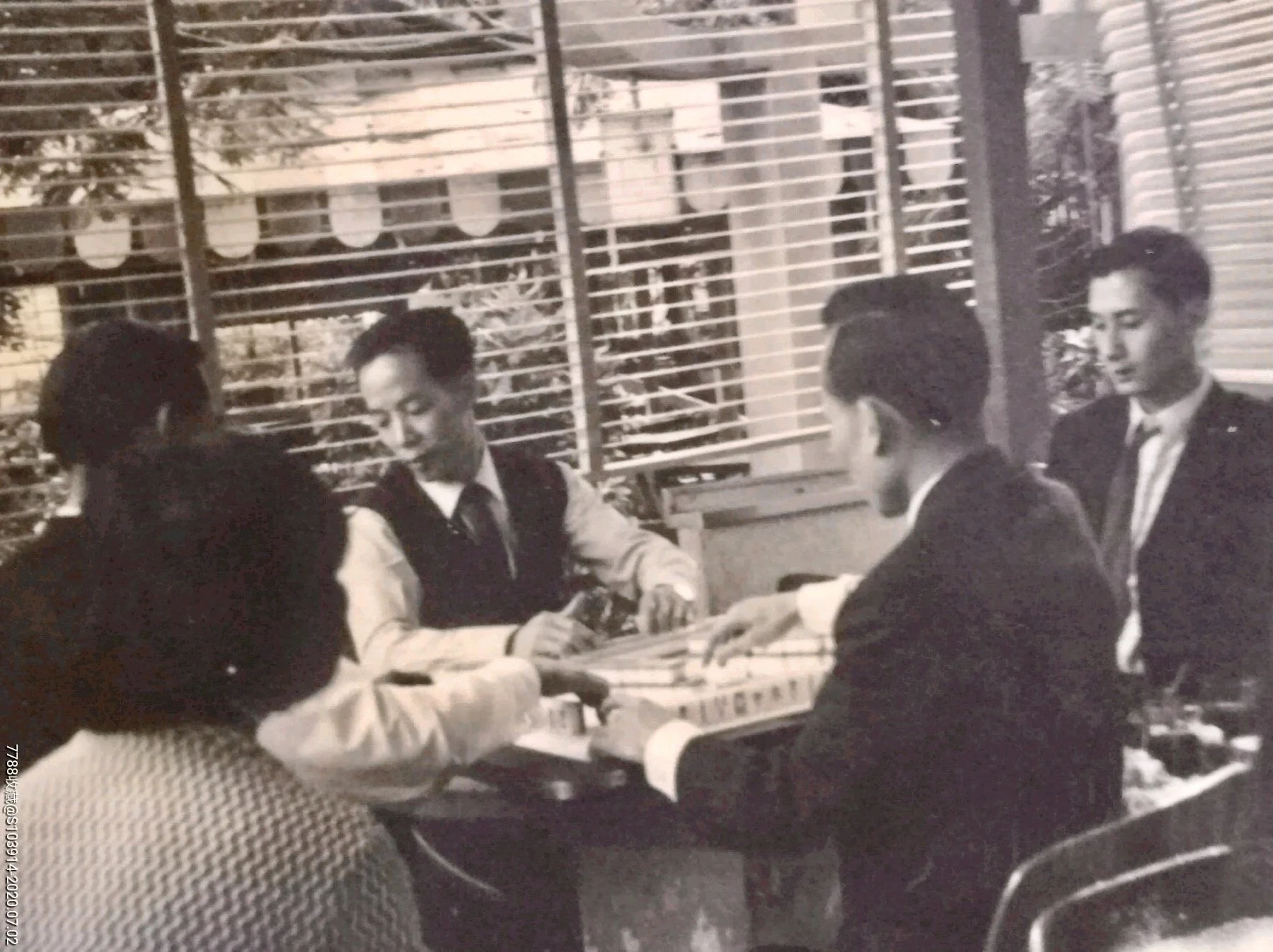
In America there have been several recent articles and TV news items about the mahjong craze current there now. Some, like the widely circulated piece in the Wall Street Journal last month, compare the American Rules playing groups dominated by white women with the growing, largely New York based, younger, often Asian-American groups playing Taiwan or Hong Kong Rules. Others, like an item on a news show in Chicago, talk about the health benefits of the game, staving off dementia with its brain-exercising and social benefits. The same week as this show was aired Shanghai social media carried a report on research showing similar findings. It went on to warn, however, that sitting down for an extended time, getting too anxious about winning or losing, sitting in airless rooms with smoke and germs, and addiction to playing were all bad for health!
Conclusions? It’s always fun to play mahjong. The rules you choose affect the amount of luck and the level of strategy in the game, but both are always present to some extent or other. I am firmly wedded to the Chinese Competition Rules and don’t want to play with wild cards or Jokers or to a rather gimmicky annual card, but that’s just me. I suspect that, like languages, it’s good for the brain to learn different rules, ad long as you open a window and listen to your watch when it tells you it’s time to stand!
Happy Playing🀄️