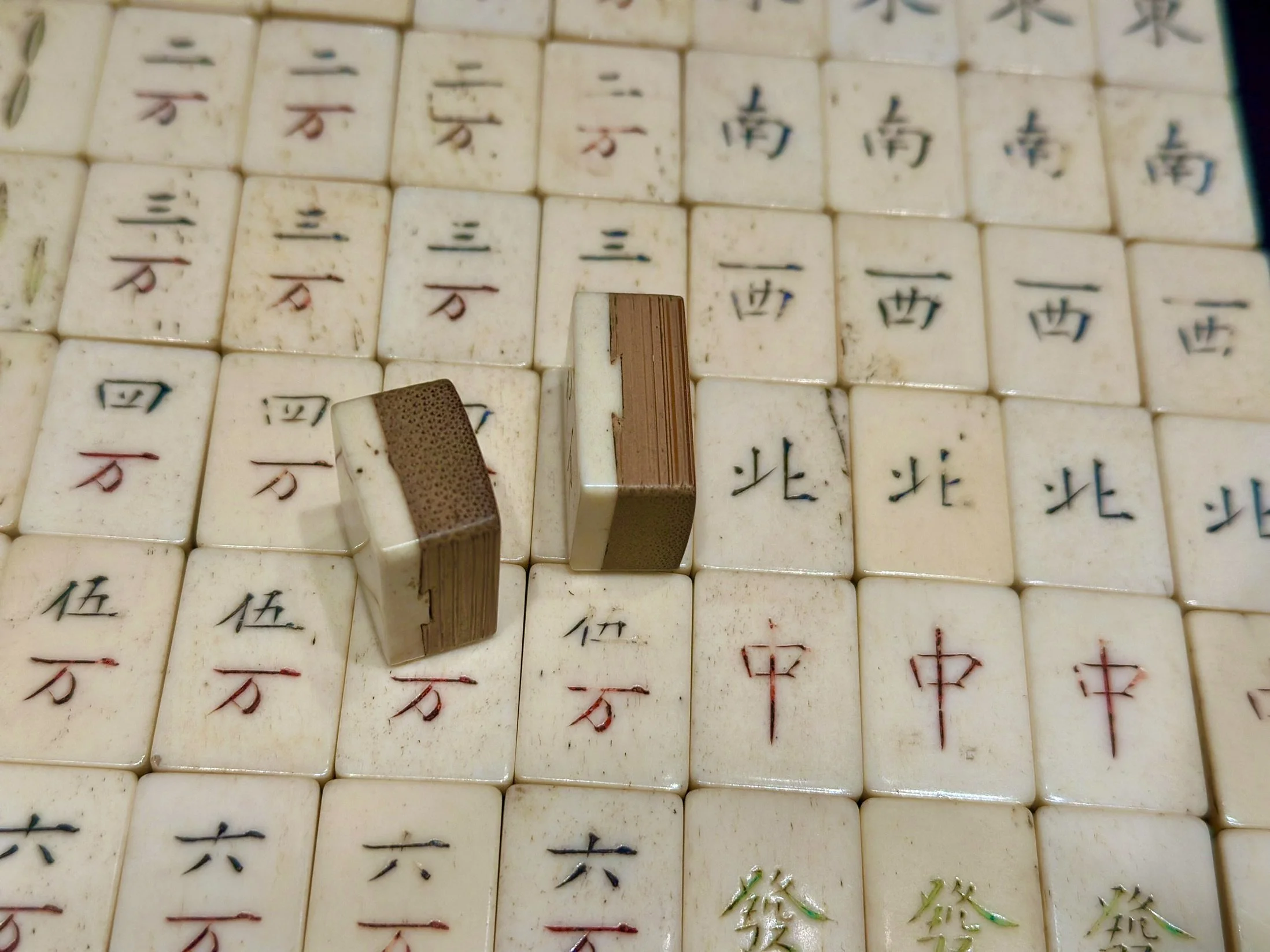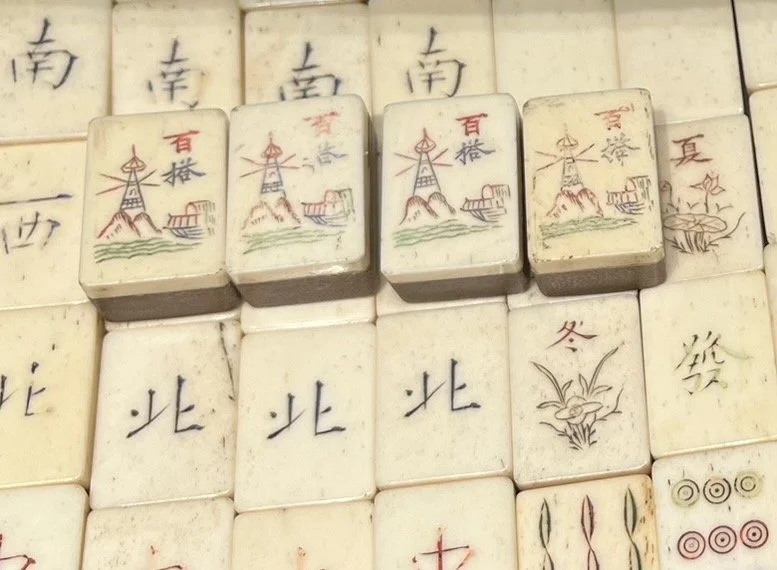
I recently found an old bone and bamboo set, nicely hand-carved flower and season tiles and with a surprising addition of four joker tiles featuring a lighthouse. It’s well-known that the aesthetics of Chinese ink painting found their way onto high quality mahjong sets through the inclusion of trees, flowers, birds, insects, mountains, pagodas and boats on the pictorial tiles, but a Western-style lighthouse? This was something new.
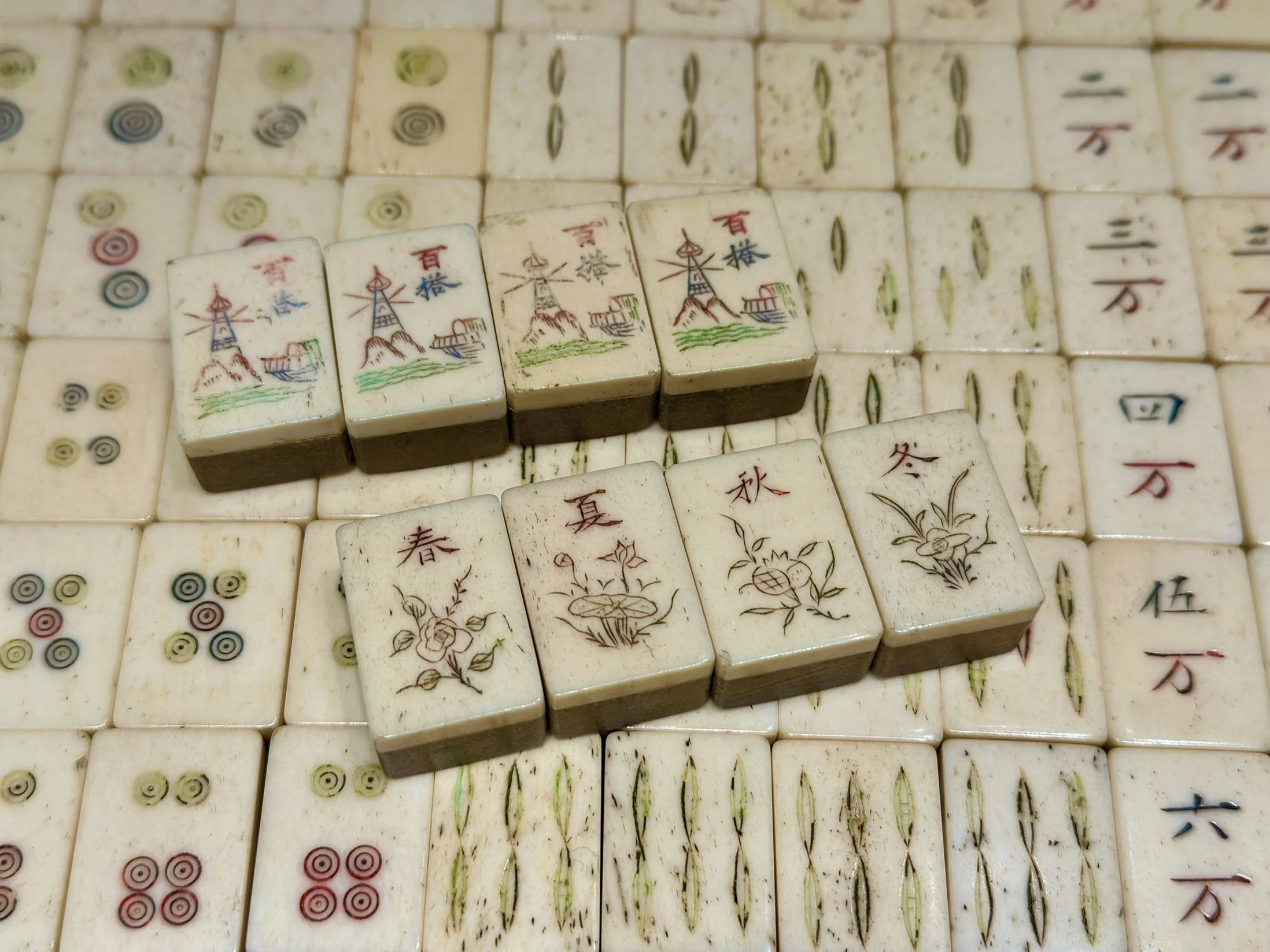
Traditionally lamps or fires were used to light the Chinese coastline when needed, and there’s some evidence that existing taller buildings were used when more light was called for. The almost 60m high Liuhe pagoda in Hangzhou, for example, was very likely used as a form of lighthouse as early as the Southern Song Period to aid boats travelling along the Qiantong River. The depiction on these tiles, however, was not of a stepped pagoda, but of a beacon light on a tower.
In 1861 the Chinese government created a Maritime Customs Service, led until 1943 by British personnel, to help establish China’s maritime infrastructure. Historians argue that it went far beyond being a revenue-collecting agency and was actively involved in a wide range of affairs in China, including diplomacy, the military, postal services, meteorology, and education. In 1868 the Customs Service retained 70% of tonnage dues for the construction and maintenance of lighthouses along China’s coast importing lighting devices from Europe and America. This was an important period in the evolution of lighthouse technology, as foreign merchants and captains of the developing steamship trade routes complained of the lack of safety. France was the world leader having invented the Fresnl lens, but the British firm Chance Brothers gradually became a competitive producer of the lighting device. The Customs Service used these devices and by the 1920s, China’s coastline was praised as ‘one of the best lit coasts in the world’ (North China Herald, 11 February, 1928).
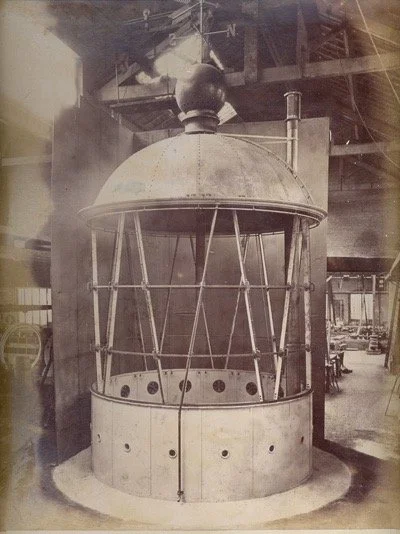
Lantern room made by Chance Brothers for Dodd Island Lighthouse
Unlike the British engineers who designed and built the lighthouses, lighthouse keepers were mostly Chinese. Until the 1920’s, however, Customs was reluctant to appoint Chinese as lightkeepers-in-charge, particularly for large coastal lighthouses. This changed as nationalist sentiment in China surged, and China’s lighthouses were gradually placed under Chinese control.
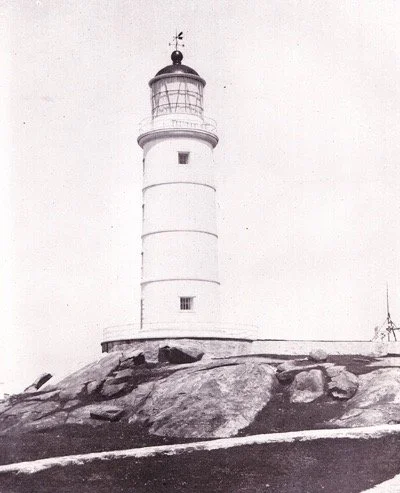
This is the Dodd Island Lighthouse, built off the East Coast of China, now part of Taiwan
This bone and bamboo mahjong set was probably made around 1920 for domestic use. The inclusion of the lighthouse on its face could be a nod to nationalist pride or to the significance of foreign trade to China’s economy. It’s certainly a reminder of the reach of the networks which allowed the movement of people, commodities and technologies in an ever-accelerating interconnected globe.